
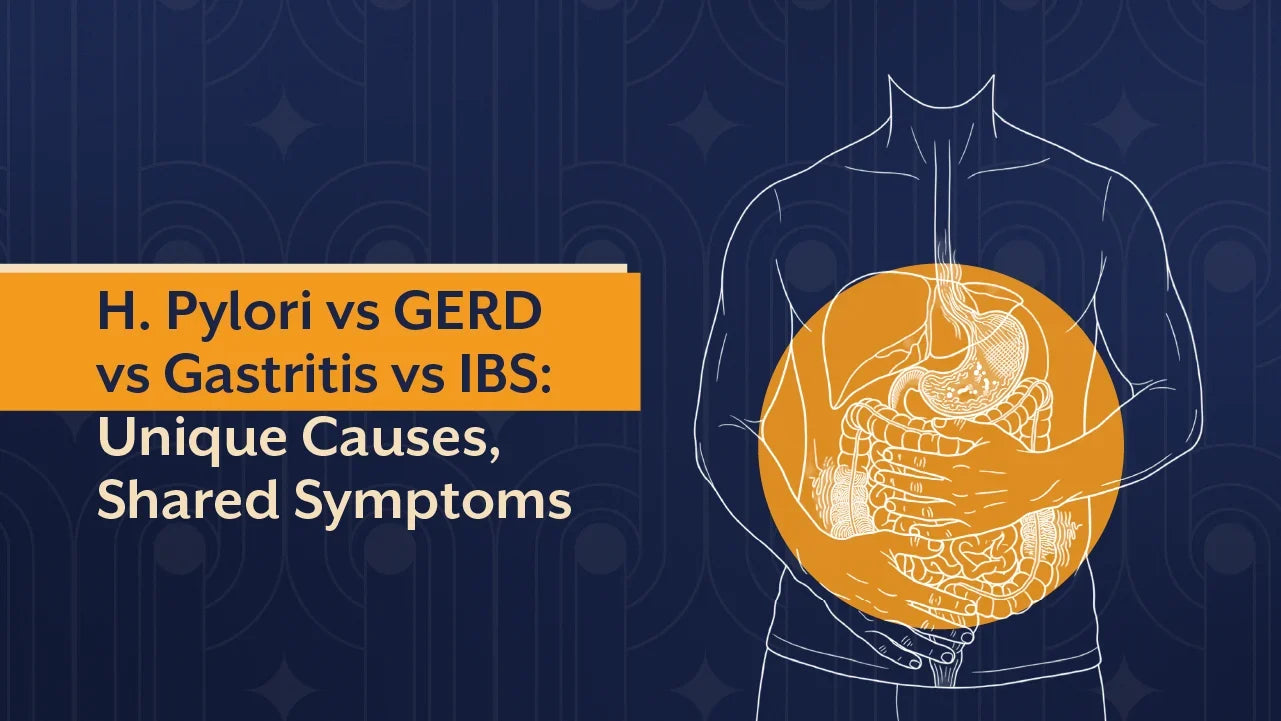
H. Pylori vs GERD vs Gastritis vs IBS: Same Symptoms, Completely Different Problems
Digestive issues can be confusing. Many conditions share similar symptoms, making it hard to pinpoint the exact problem.
H. Pylori, GERD, Gastritis, and IBS are common culprits. They often present with overlapping symptoms like bloating, pain, and discomfort.
Despite these similarities, each condition has unique causes and next steps. Understanding these differences is crucial for choosing the right kind of support.
If you're searching for a clear h pylori vs gerd comparison (and how gastritis and IBS fit in), this guide will help you make sense of the overlap.
H. Pylori is a bacterial infection that can lead to ulcers. GERD involves acid reflux, causing heartburn and regurgitation.
Gastritis is the inflammation of the stomach lining, often due to H. Pylori or irritants. IBS affects the large intestine, leading to cramping and bowel changes.
Misidentifying the cause can lead to frustration and wasted effort. Knowing the distinctions helps you choose more targeted support.
Key takeaways (quick answer)
- H. pylori is an infection that can trigger gastritis and ulcers.
- GERD is reflux (stomach contents moving up into the esophagus).
- Gastritis is inflammation of the stomach lining-sometimes caused by H. pylori, but also by alcohol/NSAIDs and other irritants.
- IBS is a gut brain interaction issue and is usually defined by abdominal pain plus bowel-habit changes (diarrhea/constipation).

Why Do These Digestive Disorders Get Confused?
Digestive disorders like H. Pylori, GERD, Gastritis, and IBS often manifest with overlapping symptoms. This leads to confusion, as many people experience similar discomfort regardless of the underlying cause.
Symptoms such as abdominal pain, bloating, and nausea are common across these conditions. As a result, individuals might assume they have one disorder when they actually have another.
Additionally, all these conditions impact the digestive tract, further muddling the distinction between them.
Here's why people get these disorders mixed up:
- Shared symptoms like bloating and pain
- Similar triggers (stress, late meals, spicy foods)
- Symptoms can overlap or occur together
It's crucial to pay attention to patterns (timing, triggers, and what helps). Doing so can help you narrow down what's most likely driving your symptoms.
What Is H. Pylori? Causes, Symptoms, and Diagnosis
H. Pylori is a type of bacterium that colonizes the stomach lining. It's known for causing infections which are often linked to ulcers.
The bacterium can spread through contaminated food and water. Poor sanitary conditions significantly increase the risk of infection.
Symptoms of H. Pylori infection can mimic other digestive disorders. Common ones include abdominal pain, bloating, nausea, and a persistent loss of appetite.
Many people with H. Pylori experience symptoms that can easily be mistaken for acid reflux or general indigestion. This similarity can delay the right kind of action.
Diagnosis typically uses non-invasive testing (like breath or stool tests), and in some cases endoscopy.
Here is a summary of H. Pylori's aspects:
- Caused by bacterial infection from H. Pylori
- Symptoms: abdominal pain, nausea, bloating
- Identified using breath/stool tests (and sometimes endoscopy)
If you want a deeper, step-by-step overview, read: How to know if you have H. pylori.
For a natural gut-support angle, you can also explore: H. pylori natural gut healing & microbial reset.
Product support (for gut comfort)
If your symptoms sound more H. pylori leaning and you're looking for targeted digestive support, you can view the H. Pylori Relief Herbal Blend. If you have questions about ingredients, how to use it, or whether it fits your routine, our iThrive support team can guide you on product use.

What Is GERD? Causes, Symptoms, and Diagnosis
GERD, or Gastroesophageal Reflux Disease, occurs when stomach acid persistently flows back into the esophagus. This acid reflux can lead to discomfort and potential irritation of the esophageal lining.
Risk factors for GERD include obesity, smoking, and dietary habits. Foods that are spicy, fatty, or acidic can exacerbate the condition, as can large meals followed by lying down.
The primary symptom of GERD is heartburn, a burning sensation in the chest. Other symptoms may include regurgitation, difficulty swallowing, and a sour taste in the mouth.
GERD is often recognized based on symptom patterns and trigger timing.
Common symptoms of GERD include:
- Heartburn
- Regurgitation
- Difficulty swallowing
- Sour taste in the mouth
Lifestyle changes, like weight loss and elevating the head of the bed, often assist in managing GERD symptoms. In addition, acid-reducing medications are commonly used by many people.
What Is Gastritis? Causes, Symptoms, and Diagnosis
Gastritis refers to inflammation of the stomach lining and can be either acute or chronic. Various factors, including infections, lifestyle choices, and certain medications, can cause it.
H. Pylori infection is a common cause of gastritis. Other causes include excessive alcohol consumption and prolonged NSAID use, which can erode the stomach lining.
Symptoms of gastritis can range from mild to severe. Common signs include nausea, vomiting, and a feeling of fullness in the upper abdomen, especially after eating. Some people might also experience a burning sensation or indigestion.
Diagnosing gastritis often involves combining your symptom pattern with appropriate testing.
Key symptoms of gastritis include:
- Nausea and vomiting
- Upper abdominal pain
- Feeling of fullness after meals
- Indigestion
Treatment depends on the cause and triggers, including reducing irritants and supporting the stomach lining.

What Is IBS? Causes, Symptoms, and Diagnosis
Irritable Bowel Syndrome (IBS) is a long-term disorder affecting the large intestine. Unlike other conditions, IBS does not cause changes in bowel tissue or increase the risk of colorectal cancer.
The exact cause of IBS remains unclear, but several factors may contribute. These can include muscle contractions in the intestine, issues with the nervous system, inflammation in the intestines, and severe infections. Stress and emotional troubles can also play a role.
Symptoms of IBS often include cramping, abdominal pain, bloating, excess gas, and diarrhea or constipation. These symptoms can fluctuate, with periods of relief followed by flare-ups.
IBS is typically identified by symptom patterns over time and by ruling out other causes when needed.
Common symptoms of IBS include:
- Abdominal pain or cramping
- Bloating and gas
- Diarrhea or constipation
- Mucus in the stool
Management of IBS often focuses on identifying personal triggers (foods, stress, sleep) and building a consistent routine.
Comparing Symptoms: H. Pylori vs GERD vs Gastritis vs IBS
H. Pylori, GERD, gastritis, and IBS often present with overlapping symptoms, leading to confusion. However, subtle differences in these symptoms can provide clues to their causes.
H. Pylori infection is typically characterized by abdominal pain, bloating, nausea, and loss of appetite. The discomfort is often localized around the stomach area.
GERD primarily manifests as persistent heartburn, regurgitation, and sometimes difficulty swallowing. Symptoms often worsen after meals or when lying down.
Gastritis can cause nausea, vomiting, and a feeling of fullness in the upper abdomen. These symptoms might appear after eating.
IBS is usually associated with abdominal pain, bloating, and changes in bowel habits like diarrhea or constipation. Stress and certain foods often trigger IBS symptoms.
Here's a quick breakdown of key symptoms for each condition:
- H. Pylori: Abdominal pain, bloating, nausea
- GERD: Heartburn, regurgitation, difficulty swallowing
Contrast this with:
- Gastritis: Nausea, vomiting, fullness after eating
- IBS: Abdominal pain, bloating, diarrhea or constipation
By understanding these symptom patterns, you can choose more targeted support and next steps.

Key Differences in Causes and Risk Factors
The underlying causes of H. Pylori, GERD, gastritis, and IBS vary significantly, influencing each condition's risk factors and the type of support that tends to work best.
H. Pylori thrives in the stomach lining, often spreading through contaminated food and water. Poor sanitation increases the risk of infection, especially in developing regions.
GERD arises when stomach acid frequently backs up into the esophagus. Obesity, smoking, and certain dietary choices can increase the likelihood of developing GERD.
Gastritis can result from various factors such as H. Pylori infection, excessive alcohol consumption, and prolonged use of nonsteroidal anti-inflammatory drugs (NSAIDs). It can also be triggered by chronic stress and autoimmune conditions.
IBS, on the other hand, is a functional gastrointestinal disorder often linked to stress, food intolerances, and hormonal fluctuations.
Key Causes and Risk Factors:
- H. Pylori: Poor sanitation, contaminated food
- GERD: Obesity, smoking, dietary habits
- Gastritis: Alcohol, NSAIDs, H. Pylori
- IBS: Stress, food intolerances, hormonal changes
Diagnosis: How They're Commonly Identified
Because the symptoms overlap, identification often combines symptom patterns with appropriate tests (especially for H. pylori). If symptoms are persistent, severe, or getting worse, it's important to seek appropriate medical evaluation.
If you're unsure whether your symptoms match H. pylori, this guide is a helpful checklist: How to know if you have H. pylori.
Treatment & Support Approaches for Each Condition
Support can vary widely among H. Pylori, GERD, gastritis, and IBS. The goal is to match your support strategy to the root cause and your triggers.
H. Pylori support: H. pylori is an infection, so many people focus on confirming the cause first, then choosing a plan. For daily gut comfort support, you can view the H. Pylori Relief Herbal Blend. If you want help choosing how to use it within your routine, our iThrive support team can assist with product guidance.
GERD support: meal timing, trigger management (spicy/fried/acidic foods), and sleep/posture habits are common focus areas.
Gastritis support: reducing irritants (alcohol/NSAIDs), gentler meals, and stomach-lining support are common approaches.
IBS support: identifying food triggers (often high-FODMAP foods), improving bowel regularity, and stress/sleep support can help.
Bloating, Pain, and Other Overlapping Symptoms: What Do They Mean?
Bloating and pain are common across H. Pylori, GERD, Gastritis, and IBS. However, they can signify different things based on the condition.
Understanding the context of these symptoms is critical. Bloating in IBS often results from dietary triggers. In contrast, GERD-related bloating might be due to reflux patterns.
Other overlapping symptoms might include nausea and appetite changes. These variations make distinguishing between conditions difficult without proper identification.
Common Overlapping Symptoms:
- Bloating
- Abdominal pain
- Nausea
- Appetite changes
When to Get Help: Red Flags and Next Steps
If symptoms are intense, persistent, or worsening, get appropriate medical help. Red flags should never be ignored.
Important Red Flags:
- Severe abdominal pain
- Unexplained weight loss
- Persistent vomiting
- Black stools or blood in stool
Conclusion: Understanding Your Digestive Health
Navigating digestive disorders can be complicated, but recognizing the differences helps. Identifying specific symptom patterns is crucial. Empowering yourself with knowledge leads to better decisions and better day-to-day support.
For additional supportive context, revisit: H. pylori natural gut healing & microbial reset. And if you want to review a product option, here's the H. Pylori Relief Herbal Blend. If you have questions about the product, our iThrive support team can help.

References

Written by Mugdha Pradhan


Leave a comment
This site is protected by hCaptcha and the hCaptcha Privacy Policy and Terms of Service apply.