
Selenium, Zinc, and Tyrosine: The Biochemical Roles of Key Thyroid Nutrients Explained
Introduction
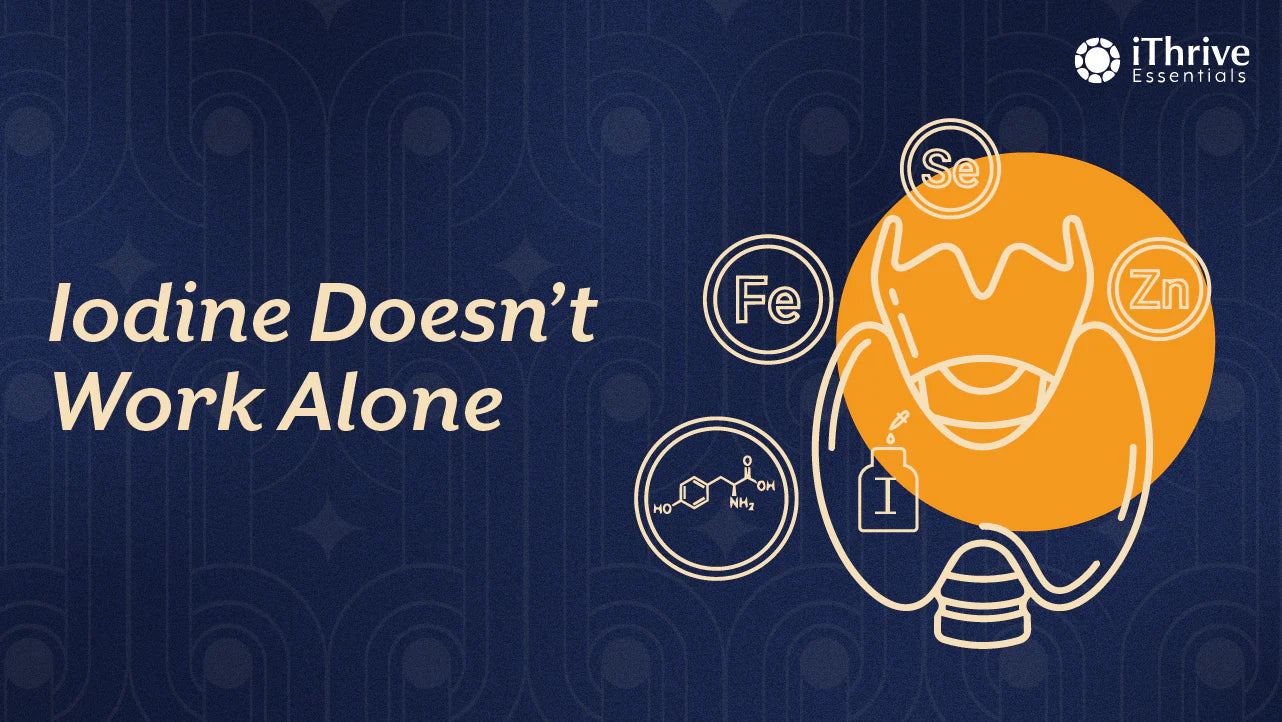
Thyroid health is often discussed in terms of iodine intake. While iodine is undeniably essential, focusing on iodine alone creates a simplified and incomplete understanding of thyroid physiology. Hormone production is not a single-step process, rather it is a coordinated biochemical sequence requiring structural building blocks, enzyme activation systems, oxidative control mechanisms, and cellular signalling support.
Three nutrients play particularly critical roles across these stages: selenium, zinc, and tyrosine.
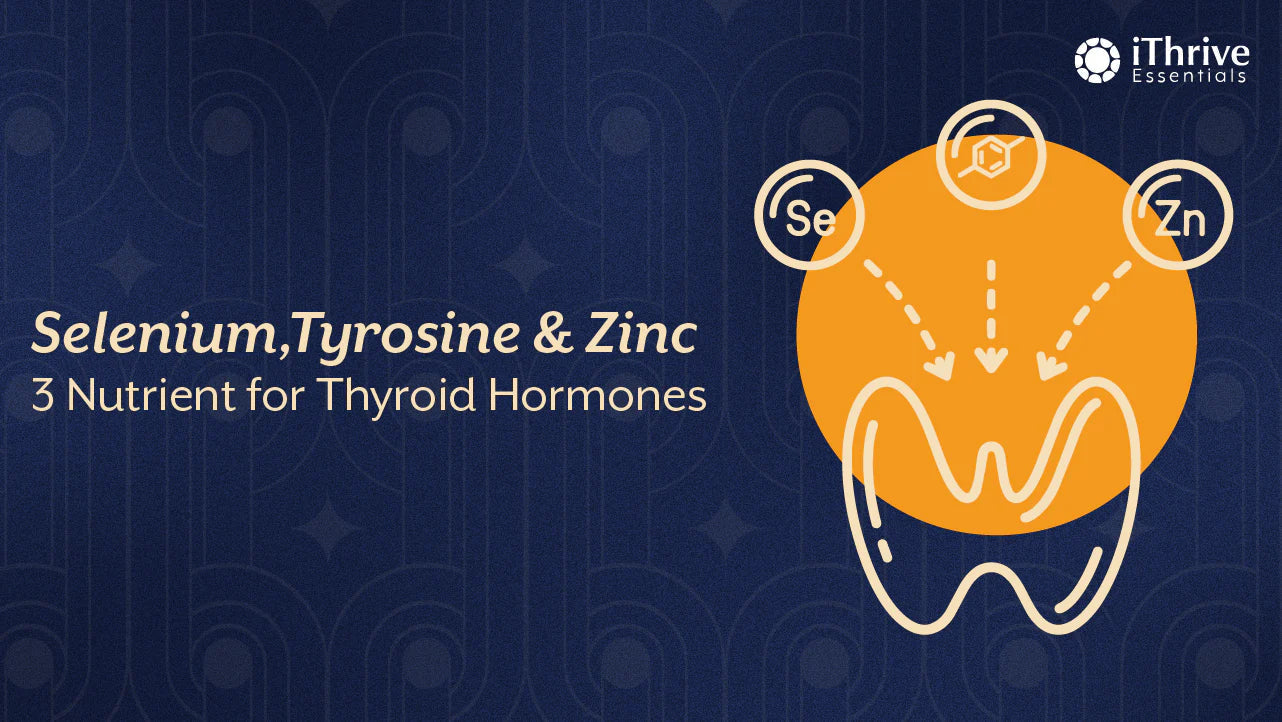
Each of these nutrients participates in distinct biochemical functions. Tyrosine provides the structural backbone of thyroid hormones. Selenium regulates enzymatic activation and protects thyroid tissue from oxidative damage. Zinc supports hormone signalling and receptor responsiveness at the cellular level. Together, they form an interdependent functional triad that influences hormone synthesis, activation, and utilization.
When even one of these components is suboptimal, thyroid physiology can become inefficient despite adequate hormone production. This explains why individuals may experience persistent fatigue, metabolic slowing, or temperature sensitivity even when laboratory hormone values appear normal.
Understanding these nutrients individually is important. Understanding how they interact within metabolic pathways is essential. This system's perspective is particularly relevant in supplement formulation, where effectiveness depends not merely on nutrient inclusion but on nutrient usability, bioavailability, and synergistic design.
1. Tyrosine: The Structural Foundation of Thyroid Hormones
Thyroid hormones originate from a simple but highly regulated biochemical starting point: the amino acid tyrosine. Within thyroid follicular cells, tyrosine residues embedded in thyroglobulin molecules undergo iodination to form monoiodotyrosine and diiodotyrosine. These molecules then couple to form thyroxine (T4) and triiodothyronine (T3).
Without adequate tyrosine availability, this structural assembly cannot occur efficiently. Hormone production may slow not because iodine is insufficient, but because the protein scaffold required for hormone construction is limited.
Tyrosine availability depends on several factors:
- Dietary protein intake
- Phenylalanine conversion efficiency
- Liver metabolic function
- Stress hormone demand
Under conditions of chronic stress, inflammation, or poor nutritional intake, tyrosine may be preferentially diverted toward catecholamine production, reducing availability for thyroid hormone synthesis.
This biochemical competition illustrates an important concept: endocrine systems do not operate independently. Stress physiology, neurotransmitter production, and thyroid function share common nutrient resources.

2. Selenium: The Regulator of Hormone Activation and Protection
If tyrosine builds thyroid hormones, selenium determines whether those hormones become metabolically functional.
Selenium is an essential component of deiodinase enzymes and specialized proteins that convert inactive T4 into biologically active T3. This conversion step is critical because most circulating thyroid hormones exist in inactive form. Cellular metabolism depends on the fraction that is activated.
Beyond activation, selenium performs an equally vital protective role. Thyroid hormone synthesis generates hydrogen peroxide as part of iodination reactions. This makes the thyroid one of the most oxidative organs in the body. Selenium-dependent enzymes such as glutathione peroxidase neutralize excess reactive oxygen species, preventing tissue damage.
Without sufficient selenium:
- Hormone activation efficiency declines
- Oxidative stress increases
- Inflammatory signalling rises
- Autoimmune vulnerability may increase
This dual role that is activation and protection makes selenium indispensable for maintaining both hormone function and gland integrity.

3. Zinc: The Mediator of Hormone Signalling
Hormone production and activation are only meaningful if cells can respond appropriately. Zinc plays a central role in this final stage of thyroid physiology: cellular signalling.
Zinc contributes to:
- Thyroid hormone receptor structure
- DNA transcription regulation
- Cellular enzyme activation
- Hypothalamic–pituitary–thyroid axis communication
Even when hormone levels are adequate, zinc deficiency can impair receptor binding and intracellular signaling. This creates a state of functional resistance, where hormones are present but metabolic response remains weak.
Zinc also supports immune regulation and epithelial barrier integrity, both of which influence thyroid inflammatory processes. Its role, therefore, extends beyond signalling into broader metabolic resilience.
4. Nutrient Interdependence: Why These Three Work Together
Thyroid physiology depends on sequential processes:
- Structural assembly
- Hormone activation
- Cellular response
Tyrosine supports stage one. Selenium regulates stage two. Zinc enables stage three.
If any stage is compromised, metabolic efficiency declines. This explains why supplementation focused on only one nutrient often produces incomplete clinical results.
Biochemistry operates through coordinated pathways, not isolated reactions. Nutrient synergy is therefore not optional, it is fundamental.
5. Bioavailability Determines Functional Impact
Not all nutrient forms behave equally within the body. Absorption efficiency, cellular transport, and metabolic integration vary significantly depending on molecular form.
Examples include:
- Chelated zinc vs inorganic salts
- Selenomethionine vs sodium selenite
- Free amino acid tyrosine vs protein-bound forms
Activated or biologically compatible forms enter metabolic pathways more efficiently, producing measurable functional effects at lower doses.
This principle is explored in "Why We Added Inositol, Choline and TMG to Our New B-Complex Supplement", which explains how nutrient form influences biochemical usability.
6. Formulation Science: Beyond Nutrient Inclusion
Effective supplementation requires more than listing essential nutrients. Formulation must consider:
- Absorption kinetics
- Nutrient competition
- Enzyme co-factor pairing
- Oxidative stability
- Targeted delivery
This systems-based approach defines modern precision formulations such as those developed by iThrive Essentials, where nutrients are structured around metabolic pathways rather than ingredient trends.
A similar systems perspective is discussed in "Toxin Overload: The Hidden Reason Behind Stubborn Weight and Low Energy", which highlights how metabolic networks respond to cumulative physiological stress.

7. Clinical Implications of Suboptimal Nutrient Status
When tyrosine, selenium, or zinc availability is insufficient, several functional patterns may emerge:
- Sluggish metabolic rate despite normal hormone levels
- Increased fatigue and cognitive slowing
- Reduced stress tolerance
- Temperature dysregulation
- Impaired energy production
These patterns reflect inefficiency within hormone utilisation pathways rather than simple deficiency.
8. Why Precision Nutrient Balance Matters
Optimal thyroid physiology depends on proportional nutrient balance rather than isolated adequacy. Excessive intake of one nutrient cannot compensate for deficiency in another stage of the pathway.
Balanced formulation ensures:
- Structural hormone synthesis
- Efficient activation
- Effective cellular response
This integrated support defines clinically meaningful supplementation.
Key Takeaway
Selenium, zinc, and tyrosine represent distinct but interconnected pillars of thyroid physiology. Tyrosine provides the structural framework from which thyroid hormones are built. Selenium governs the enzymatic activation and oxidative protection required for those hormones to function safely. Zinc ensures that activated hormones can communicate effectively with cells and regulate metabolic activity.
When any of these processes is compromised, thyroid efficiency declines even if hormone production appears adequate. This is why effective thyroid support cannot rely on single-nutrient strategies. True metabolic support requires coordinated nutrient availability, biologically compatible forms, and formulation design that reflects the sequential nature of hormone synthesis, activation, and cellular response. Understanding these biochemical relationships transforms supplementation from nutrient replacement into physiological restoration.

Leave a comment
This site is protected by hCaptcha and the hCaptcha Privacy Policy and Terms of Service apply.