

How to Control High BP Naturally: Diet, Lifestyle & Supplements
Introduction
High blood pressure rarely begins with a dramatic warning. It develops quietly, gradually reshaping vascular structure, metabolic signalling, and cellular communication long before symptoms appear. For many people, the diagnosis feels sudden but physiologically, the process has often been unfolding for years.
Understanding how to control high BP therefore requires more than simply reducing numbers on a monitor. Blood pressure is not an isolated cardiovascular event. It reflects the integrated function of endothelial health, mineral balance, nervous system tone, metabolic flexibility, and inflammatory status. When these systems drift out of balance, vascular resistance rises, and pressure follows.
This is why modern high bp treatment is increasingly shifting toward functional, multi-pathway intervention. Instead of viewing hypertension only as a circulatory disorder, it is now understood as a metabolic and regulatory condition influenced by diet, lifestyle behaviour, and nutrient signalling.
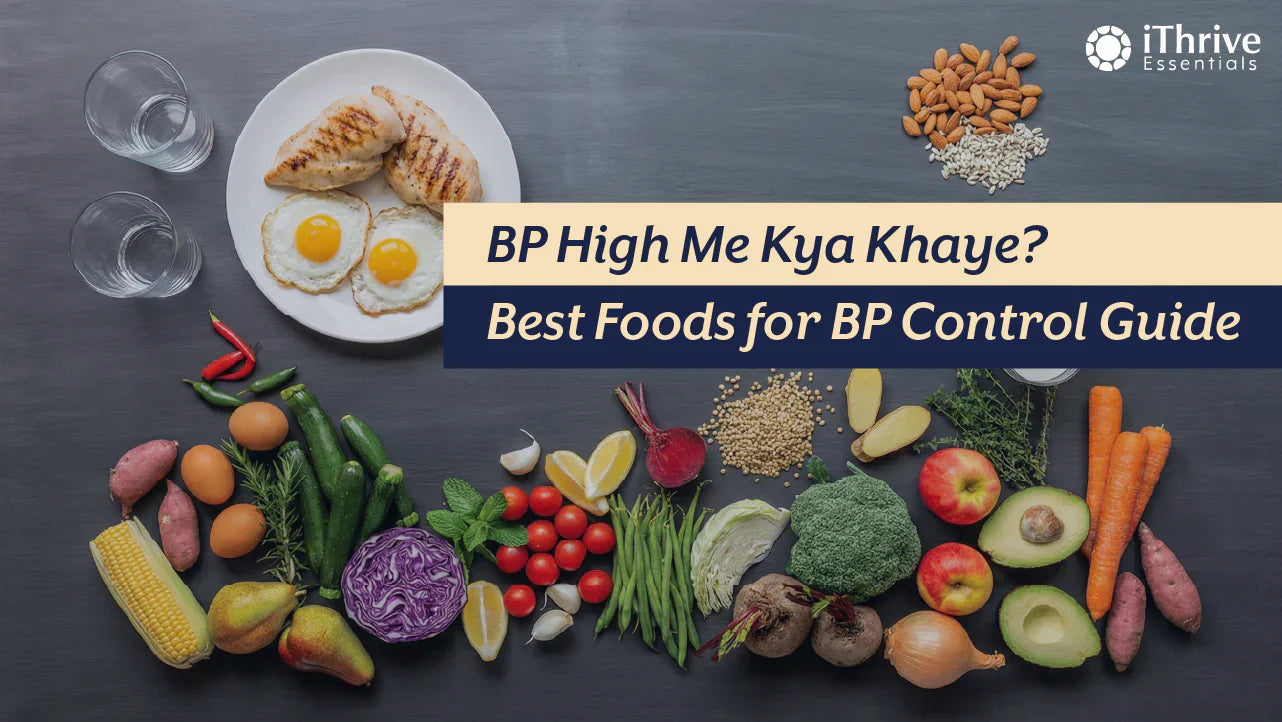
Many individuals searching bp high me kya khaye are really asking a deeper question: how can daily choices influence vascular biology?
The answer lies in three interconnected domains:
- Structural nutrition that supports vessel function
- Lifestyle rhythms that regulate neurohormonal pressure control
- Precision supplementation that corrects biochemical bottlenecks
This article explores these mechanisms in depth - not just what to do, but why each strategy works at the cellular level.
1. The Biology of Blood Pressure Regulation
Blood pressure reflects the interaction between cardiac output and vascular resistance. While this seems straightforward, the determinants of vascular resistance are highly complex.
Arterial tone is governed by endothelial nitric oxide production, calcium channel activity in smooth muscle, sodium-potassium balance, oxidative stress levels, and sympathetic nervous system signalling. Any disruption in these pathways can stiffen vessels or increase fluid retention, both of which elevate pressure.
Chronic inflammation further accelerates structural remodelling. Micro-damage to the endothelial lining reduces vasodilation capacity, while oxidative stress impairs nitric oxide availability. Over time, arteries become less responsive, requiring higher pressure to maintain circulation.
This systems perspective explains why dietary patterns, stress exposure, sleep quality, and micronutrient status all influence hypertension risk. Blood pressure is not simply a cardiovascular metric; it is a metabolic signal.
For deeper biochemical context, see the internal reading: “The Mode of Action for Omega-3s: How Fats Talk to Your Cells.”

2. Diet as Vascular Architecture Support
When people ask bp high me kya khaye, they often receive simplified advice: reduce salt, eat fruits, and avoid fried foods. While directionally correct, this does not explain the physiological mechanisms.
Food influences blood pressure through mineral gradients, antioxidant delivery, membrane lipid composition, and hormonal regulation.
Potassium-rich foods promote sodium excretion through renal signalling, directly lowering vascular volume load. Magnesium modulates calcium entry into smooth muscle cells, preventing excessive contraction. Polyphenols reduce oxidative stress and protect endothelial nitric oxide production.
Dietary fats also reshape cellular membranes. Omega-3 fatty acids integrate into phospholipid bilayers, improving membrane fluidity and vascular responsiveness. This structural effect is why certain fats influence pressure independently of calorie intake.
Importantly, dietary patterns - not isolated nutrients - determine long-term vascular resilience. Whole food combinations create synergistic signalling that stabilizes metabolic regulation.
For a deeper understanding of lipid structural signalling, revisit: “The Mode of Action for Omega-3s: How Fats Talk to Your Cells.”

3. Lifestyle Rhythms and Neurovascular Control
Blood pressure fluctuates continuously in response to nervous system activity. The autonomic nervous system regulates vessel constriction through sympathetic and parasympathetic balance.
Chronic stress maintains sympathetic dominance, increasing heart rate, vascular tone, and cortisol secretion. Over time, this elevates baseline pressure even at rest.
Sleep plays an equally critical role. During deep sleep, blood pressure naturally declines, a phenomenon known as nocturnal dipping. Reduced sleep quality blunts this restorative phase, maintaining persistent vascular load.
Physical movement enhances endothelial function by increasing shear stress on vessel walls. This stimulates nitric oxide release and improves arterial elasticity. Regular exercise therefore acts as mechanical conditioning for the vascular system.
These behavioural inputs directly influence biochemical pathways, making lifestyle intervention a foundational component of high bp treatment.
For broader metabolic integration, see: “Magnesium and Cellular Energy: Why Mineral Status Controls Metabolic Stability.”
4. Why Supplementation Becomes Necessary
Even an optimal diet and lifestyle cannot always correct biochemical deficiencies. Modern soil depletion, stress burden, and metabolic disorders frequently create micronutrient gaps that impair vascular regulation.
Supplementation becomes relevant when physiological pathways lack required cofactors.
Magnesium deficiency, for example, disrupts calcium channel control, promoting arterial constriction. Omega-3 deficiency reduces membrane flexibility and inflammatory balance. Antioxidant insufficiency accelerates oxidative vascular damage.
However, supplementation effectiveness depends heavily on formulation science. Absorption, molecular form, and nutrient pairing determine biological impact - not simply dosage.
For formulation principles, refer to “Nutrient Form Determines Biological Impact: Why Delivery Systems Matter.”
5. Precision Nutrient Strategies for High BP
Magnesium - vascular relaxation regulator
Magnesium acts as a natural calcium channel modulator. It prevents excessive contraction of vascular smooth muscle and stabilizes electrical signalling in the heart. Clinical evidence consistently links higher magnesium status with lower vascular resistance.
Omega-3 - membrane and inflammation regulator
Omega-3 fatty acids improve endothelial responsiveness and reduce inflammatory signalling. Their incorporation into cell membranes enhances nitric oxide activity and vascular flexibility.
Antioxidants - oxidative stress control
Reactive oxygen species degrade nitric oxide and damage vessel walls. Antioxidant protection preserves vascular signalling integrity.
When combined strategically, these nutrients address structural, electrical, and inflammatory dimensions of hypertension simultaneously.
For formulation synergy, revisit: “The Mode of Action for Omega-3s: How Fats Talk to Your Cells.”
6. Formulation Matters More Than Dosage
Many individuals assume a higher dose equals a greater benefit. In reality, biological response depends on delivery efficiency.
Magnesium glycinate differs dramatically from magnesium oxide in absorption. Phospholipid-bound omega-3 integrates differently from ethyl ester forms. Antioxidant stability determines whether fatty acids remain functional or oxidize.
Clinically effective supplementation therefore requires bioavailable forms, protective cofactors, and targeted delivery.
This formulation-first philosophy defines the approach of iThrive Essentials, where nutrient design focuses on absorption, synergy, and metabolic compatibility rather than isolated dosing.

Key Takeaway
Learning how to control high BP naturally requires shifting perspective from symptom management to systems regulation. Blood pressure reflects the combined behaviour of vascular structure, nervous system tone, mineral balance, and inflammatory status.
Diet provides foundational signalling, lifestyle regulates neurovascular rhythms, and targeted supplementation corrects biochemical limitations that food alone cannot always resolve. True high bp treatment is therefore not a single intervention but an integrated strategy - one that respects physiology, supports cellular communication, and restores the body’s inherent regulatory intelligence. When structural nutrition, behavioural stability, and precision nutrient delivery work together, blood pressure control becomes not just achievable but sustainable.


Leave a comment
This site is protected by hCaptcha and the hCaptcha Privacy Policy and Terms of Service apply.