BP High Me Kya Khaye? Best Foods for High Blood Pressure
Introduction
When people first hear they have high blood pressure, the most immediate question is simple and practical: bp high me kya khaye? What should I eat to bring my numbers down?
It sounds like a dietary question but physiologically, it is much deeper. Blood pressure is not controlled by a single food, a single mineral, or a single habit. It reflects the behaviour of your vascular system, kidneys, nervous system, hormonal signalling, and cellular metabolism all working together.
This is why long-term prevention of hypertension depends not only on reducing salt or avoiding processed foods, but on understanding how nutrients regulate vascular function at a structural level.
Food is not just fuel. It is a biochemical instruction.
Every mineral, fatty acid, antioxidant, and plant compound sends regulatory signals that influence vessel elasticity, fluid balance, inflammatory activity, and nerve signalling. Over time, these signals determine whether arteries remain flexible and responsive, or stiff and resistant.
Understanding diet for high blood pressure therefore means understanding vascular biology.
Before we discuss what to eat, it is essential to understand what blood pressure represents, what the high BP range actually indicates, and how food interacts with the systems that control it.
1. What Does High Blood Pressure Actually Mean?
Blood pressure reflects the force required to move blood through your vascular network. When vessels become stiff, narrowed, or poorly regulated, the heart must push harder, further raising pressure.
Clinically, blood pressure is categorized into ranges that indicate increasing strain on the cardiovascular system. But these numbers are only surface indicators. Beneath them lie multiple physiological processes:
- Endothelial dysfunction
- Reduced nitric oxide availability
- Mineral imbalance
- Chronic inflammation
- Nervous system overactivation
- Fluid retention
These changes often develop silently over years. By the time someone enters the high BP range, structural and regulatory shifts are already well established.
This is why prevention of hypertension must begin early through a diet that preserves vascular flexibility and metabolic stability.
For deeper mechanistic understanding, revisit the internal knowledge resource: “The Mode of Action for Omega-3s: How Fats Talk to Your Cells.”

2. Food as a Regulator of Vascular Function
When asking bp high me kya khaye, most advice focuses on restriction - reduce salt, avoid fried foods, limit sugar. While helpful, this is incomplete.
The more important question is: what foods actively restore vascular regulation?
Food affects blood pressure through four primary mechanisms:
Mineral balance
Sodium, potassium, and magnesium control fluid distribution and vascular contraction.
Endothelial protection
Antioxidants preserve nitric oxide signalling, allowing vessels to relax.
Membrane structure
Fatty acids alter cell membrane flexibility and receptor sensitivity.
Inflammatory modulation
Plant compounds regulate immune signalling that affects vascular stiffness.
These processes operate simultaneously. This is why dietary patterns, not isolated nutrients, determine long-term outcomes.
To understand structural lipid signalling more deeply, revisit: “The Mode of Action for Omega-3s: How Fats Talk to Your Cells.”
3. The Most Important Foods for High Blood Pressure
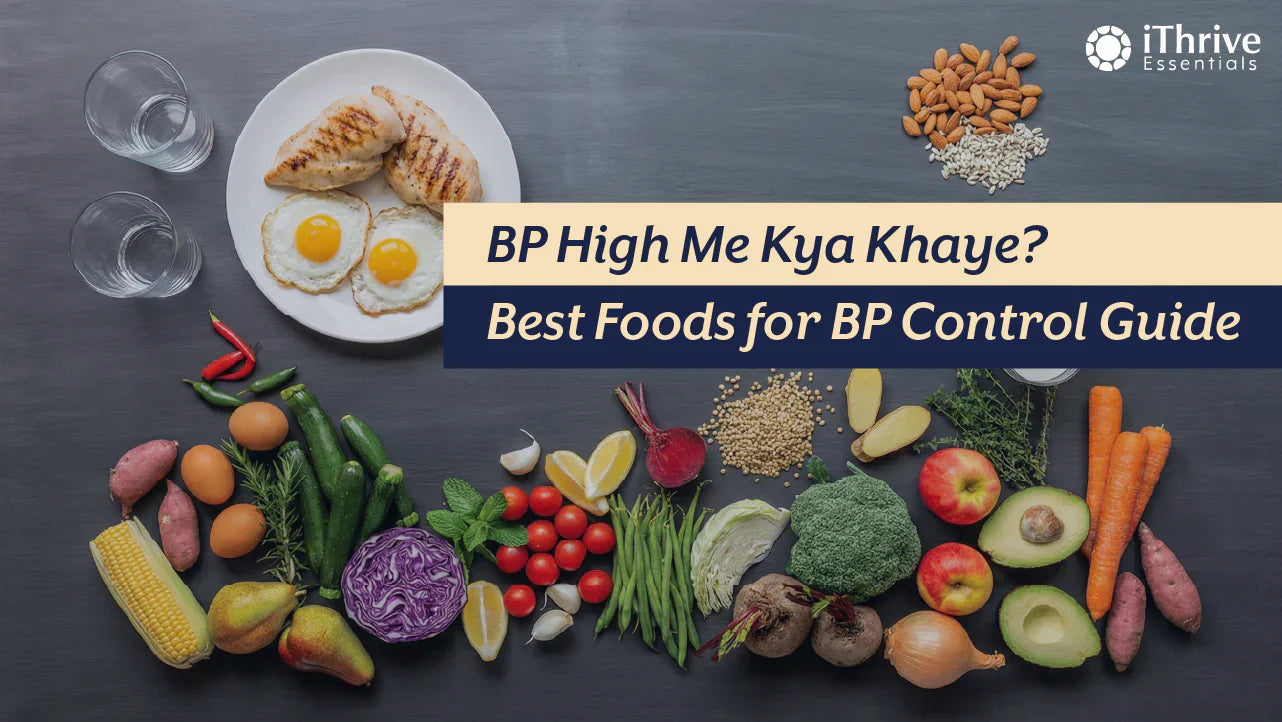
Now we address the practical core: bp high me kya khaye daily?
Certain food groups consistently support vascular health because they influence fundamental physiological pathways.
Potassium-rich vegetables and fruits
Leafy greens, pumpkin, bananas, and lentils help counter sodium-driven fluid retention and improve vascular responsiveness.
Magnesium-dense foods
Seeds, nuts, legumes, and whole grains regulate smooth muscle contraction in blood vessels.
Omega-3 fatty acid sources
Fatty fish and marine oils improve membrane flexibility and reduce inflammatory signalling.
Polyphenol-rich foods
Berries, cocoa, and green tea provide antioxidant protection that preserves endothelial function.
Nitrate-containing vegetables
Beetroot and leafy greens enhance nitric oxide production, improving vessel dilation.
These foods do not “treat” hypertension directly. Instead, they restore the biological environment required for pressure regulation.

4. Why Food Alone Is Sometimes Not Enough
Many individuals follow healthy diets yet remain in the high BP range. This happens because nutrient intake does not always equal nutrient availability.
Absorption efficiency varies widely depending on digestive health, metabolic demand, and nutrient form. Soil depletion and modern food processing also reduce micronutrient density.
As a result, critical vascular regulators particularly magnesium and omega-3 fatty acids are often insufficient even in well-planned diets.
This is where targeted supplementation becomes relevant.
But effectiveness depends heavily on formulation. Poorly absorbed nutrients cannot meaningfully influence physiological pathways.
To understand why delivery systems matter, revisit: “Nutrient Form Determines Biological Impact: Why Delivery Systems Matter.”
5. Precision Nutrition for Prevention of Hypertension
Modern nutritional science increasingly focuses on precision formulation, further delivering nutrients in biologically usable forms that directly influence regulatory pathways.
Magnesium - electrical and vascular regulator
Supports muscle relaxation, nerve signalling, and enzyme activation involved in pressure control.
Omega-3 - structural membrane modulator
Enhances endothelial responsiveness and reduces inflammatory vascular damage.
Antioxidant protection
Prevents oxidative degradation of nitric oxide and membrane lipids.
When designed properly, these nutrients complement dietary intake and support long-term prevention of hypertension.
This formulation-first philosophy is central to iThrive Essentials, where nutrient design emphasizes absorption efficiency, molecular stability, and synergistic pairing rather than isolated dosing.

Key Takeaway
The question bp high me kya khaye cannot be answered with a single food list because blood pressure is not controlled by one dietary component. It is regulated by the coordinated behaviour of vascular structure, mineral balance, inflammatory signalling, and nervous system activity.
The most effective nutritional strategy therefore focuses on foods that restore physiological regulation involving potassium-rich plants, magnesium-dense whole foods, omega-3 sources, and antioxidant-rich compounds that protect endothelial function. When dietary intake is insufficient or metabolic demand is elevated, bioavailable nutrient formulations can provide targeted support. Ultimately, prevention of hypertension is not about restriction alone, it is about creating a biological environment in which blood vessels remain responsive, adaptable, and resilient over time.

Leave a comment
This site is protected by hCaptcha and the hCaptcha Privacy Policy and Terms of Service apply.