
Article: Most Dog/Cat Owners Miss This Nutrient Until Their Pet Starts Slowing Down
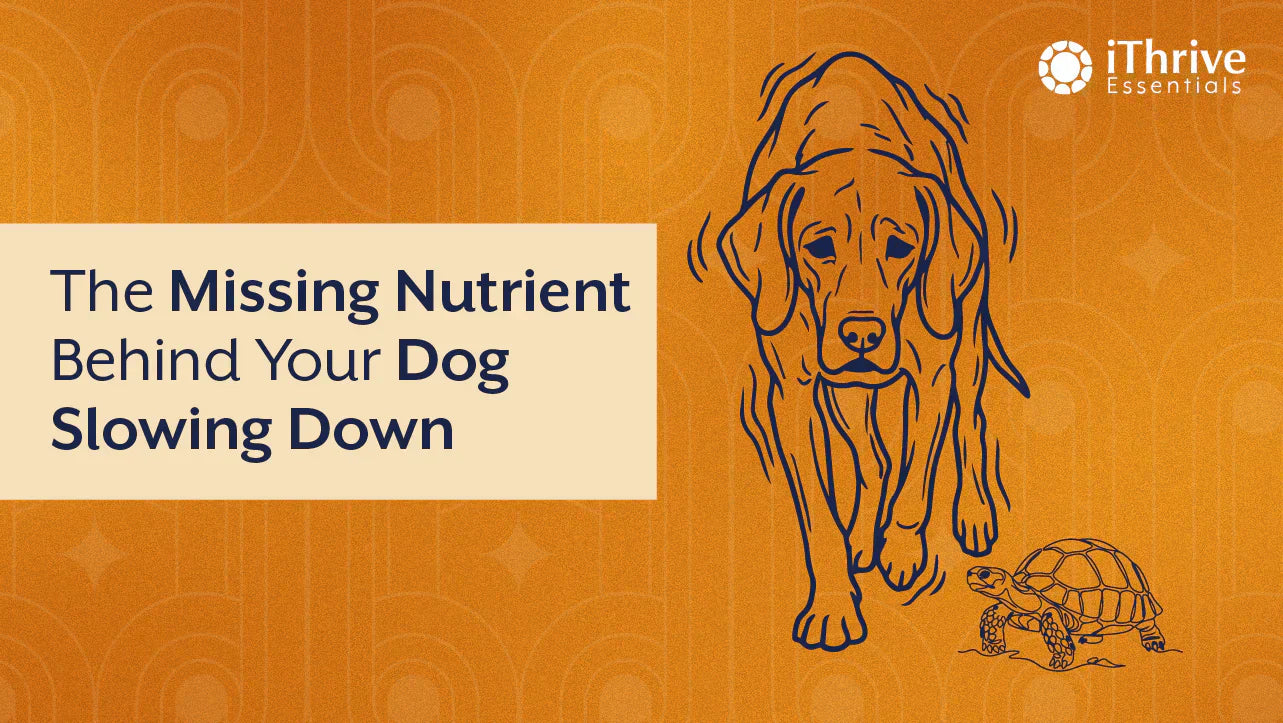
Most Dog/Cat Owners Miss This Nutrient Until Their Pet Starts Slowing Down
Introduction
Most people notice the change very slowly.
It often starts with.. my dog is still eating, going for walks, still waging it’s tail when they come home. But yet something is very different.
The pet that once used to race to the door now gets up very slowly. The one that loved long walks now sits down halfway through extremely tired. Their coat becomes dull. They lose muscles around the shoulders and hips. They seem to be tired, not interested, and somehow even older than they actually should.
Most of the owners like us assume it’s all about the age.
Sometimes, it truly is. But often, what people call “slowing down” can prove to be a nutritional problem hiding in plain sight.
I have encountered this repeatedly in dogs that are fed expensive food, premium treats, and even diets that are still marketed as complete and balanced. On paper, they are of course getting enough calories. But when you look closely, one thing is always missing.
Not just protein but the right amino acids.
Let me keep it clear for you, protein for dogs is only beneficial if the body is able to break it down into the very exact building blocks it needs. Those building blocks are known as amino acids. And among them, 9 are considered essential amino acids dogs cannot make on their own. If they aren’t present in the diet in the right amounts, the body has no other choices but to necessarily break down its own muscle, immune cells, skin, and connective tissue for survival.
This is the only reason why your dog can appear well fed and still become slower, weaker, less resilient and thinner over time.
This is exactly the conversation most commercial dog food labels never have.
What Are Essential Amino Acids for Dogs?

When you hear the word “protein,” you might think that all the proteins are the same, but no it’s not. Protein is made of amino acids. Some amino acids can be produced by the body itself when needed, others cannot, and that’s called essential amino acids.
So you might be thinking…what are essential amino acids for dogs?
They are the amino acids that a dog/cat must get directly from the food because the body can't manufacture without them. Without them, dogs cannot even build or repair their muscle, make hormones, support their immune system, heal after chronic or say even acute illness, or maintain their fur and healthy skin.
The 9 essential amino acids dogs require are:
- Leucine
- Isoleucine
- Valine
- Lysine
- Methionine
- Phenylalanine
- Threonine
- Tryptophan
- Histidine
The iThrive Essentials EAA formula also includes L arginine and creatine monohydrate because these play an important role in circulation, recovery, energy production, and muscle function.
Why amino acids matter more than total protein.
This is the part most of your dog/cat owners might have never even heard.
A food may contain a large amount of protein, but if it doesn’t contain all the essential amino acids in the right ratio for whatsoever, the body cannot use it efficiently.
Just imagine trying to build a house with bricks, cement, windows, and doors but no steel. You may have most of what it needs you to build the house, but without that one missing piece, the entire structure is weaker.
The same thing happens inside the body of your pet. If even one essential amino acid is missing, protein synthesis slows down completely. The body cannot build new tissue properly, muscle repair stalls, fur becomes thinner and thinner and the immune function weakens drastically. This is why complete protein for dogs amino acids matter far more than just the number written on the back of a random dog food bag.
Why So Many Dogs Are Missing This Nutrient

One of the biggest misconceptions in pet nutrition is that if a food claims “high protein,” it must be surely sufficient.
But then when I look at the majority of the commercial dry and wet foods, I often find the very same issue. Too much carbohydrate and too little of usable protein.
Dogs are carnivores by design. Their bodies have evolved to run on animal protein. Ideally, they surely should be receiving at least 20% protein from wet food and 40% protein from dry food. Yet almost all the commercial foods fall far below this. They are highly dependent on wheat, rice, starches, corn, or fillers because these ingredients are way cheaper and easier to manufacture.
Your dog may be eating enough food but still not receiving enough amino acids for dogs to maintain strong muscles, a resilient immune system, and healthy organs.
The hidden problem with processed dog food
Commercial food often lists a protein percentage that sounds highly impressive. But that number doesn’t tell you how much of that protein is truly usable. A large portion may come from low quality protein sources that are poorly digested or missing key amino acids. This is one reason dog food missing nutrients has become such an eminent topic in veterinary nutrition.
A dog may technically be consuming protein, but not enough of the amino acids required to:
- Repair muscle after activity
- Recover after illness or surgery
- Maintain a healthy skin and coat
- Support the immune system
- Preserve strength with age
We at iThrive essentials we’ve worked with a family whose 8 year old Labrador had become quite less active over the span of 6 months. They thought he was just “simply old.” But when we looked at his diet, the problem seemed to be very obvious. His food just consisted of 18% protein, and most of that majorly came from cereal ingredients. Within weeks of increasing high quality amino intake, his muscle tone, enthusiasm, and energy change drastically.
And the hidden factor was not age, it was deficiency.
The Early Signs Your Dog May Need More Amino Acids
Protein deficiency in dogs never looks like a big deal in the beginning. It always begins with all those small changes that are very easy to miss.
Your dog suddenly starts sleeping more, walking less, the fur becomes rough or dull and seems slower to recover after exercise. A cut or scrape takes longer to heal and they also become more prone to allergies, infections, or digestive problems.
Then over time, the deeper signs appear.
Common signs of low amino acid intake in dogs/cat
- Loss of muscle, specifically around the shoulders and back legs
- Dry skin or flaky patches
- Brittle, thinning, or dull fur
- Low energy and reluctance to exercise
- Frequent illness or slow healing
- Weight loss despite of eating normally
- Weak nails and fragile joints
- Increased risk of parasites or diarrhoea
- Very poor recovery after illness, any intense activity, or surgery.
Why older dogs are especially vulnerable
Older dogs mostly absorb protein comparatively less efficiently. Even if they eat the very same food as they always have, their body may no longer utilize it properly.
This is one of the reasons many senior dogs lose muscles rapidly even when their appetite appears to be normal.
In these cases, an EAA supplement for dogs can make a major difference because it bypasses part of the digestive burden and offers the exact amino acids the body needs promptly.
I have seen senior dogs nearby who had become hesitant on stairs, reluctant to play, and visibly thinner around the hips regain strength within a few weeks of improving their amino acid intake. Not because they became younger but truly because the body finally had the raw materials it needed.
Why Essential Amino Acids Work Better Than More Protein
When most owners like all of us realise their dog may not be getting enough protein, we often respond by feeding more meat or switching to a higher protein food. Sometimes that helps but not always because the real issue is not always the amount of protein. It is how much of that protein can actually be converted into body tissue.
This is where essential amino acids dogs supplements prove to be different. The iThrive Essentials EAA formula contains all nine essential amino acids in a ratio designed for extremely high net amino acid utilisation, often called NAV.
What is net amino acid utilisation?
NAV refers to the amount of amino acids that the body can actually convert into useful tissue, such as:
- Muscle
- Skin
- Fur
- Organs
- Hormones
- Enzymes
- Immune cells
Many ordinary proteins are only partly utilised by the body. The rest is broken down into waste products such as uric acid and ammonia. These by-products can then place stress on the kidneys, liver, as well as digestive system.
The iThrive Essentials formulation is different because its amino acids are almost completely converted into body protein. That means less metabolic waste and much more benefit.
This becomes especially important in:
- Senior dogs
- Dogs recovering from surgery or illness
- Dogs with reduced kidney or liver function
- Dogs with allergies or digestive problems
- Working, athletic, or highly active dogs
Why this matters for dogs with kidney or liver issues
Many of us owners worry that giving more protein will stress the kidneys or liver.
That concern is understandable.
But poorly digested protein is often the real problem.
Because EAAs are used so efficiently, they produce far fewer nitrogen waste products than ordinary protein. In real time, that means they can support dogs with reduced kidney or liver function without placing the same burden on metabolism. This is one of the most overlooked benefits of an EAA supplement for dogs.
Which Dogs Benefit Most From an EAA Supplement?

Technically, every dog needs essential amino acids. But some dogs need more than others.
The dogs most likely to benefit include:
- Puppies during rapid growth
- Pregnant and lactating dogs
- Senior dogs
- Athletic, sporting, and working dogs
- Dogs recovering from surgery, illness, or injury
- Dogs eating low protein commercial diets
- Dogs with allergies or on restricted diets
- Dogs with digestive or absorption issues
- Dogs with liver or kidney concerns
The role of amino acids in immunity, skin, and fur
Most people think amino acids are only about muscle, but they are not.
Amino acids are also needed to produce:
- Collagen for joints and skin
- Keratin for fur and nails
- Antibodies for the immune system
- Hormones and neurotransmitters
- Digestive enzymes
That is why a deficiency can show up as recurring allergies, poor skin, dull fur, frequent infections, or even changes in mood and behaviour.
I have seen dogs whose chronic skin issues improved not because of another shampoo or allergy medication, but because their body finally received the amino acids it needed to repair the skin barrier itself.
How to Use iThrive Essentials EAA for Dogs
The iThrive Essentials EAA supplement can be used alongside fresh food, BARF diets, dry food, or wet food.
It is specifically useful when the protein content of the main diet is quite low.
Suggested dosage
If your dog’s food contains less than 20% protein in wet food or less than 40% protein in dry food:
- 2 g daily per 10 kg body weight
If your dog’s food already exceeds those protein levels:
- 1 g daily per 10 kg body weight
The formula is also suitable for cats, which is useful in households with more than one pet.
Why this formulation is different
Unlike many pet supplements, iThrive Essentials EAA contains no fillers, artificial additives, flavouring agents, or unnecessary performance substances.
It provides:
- The nine essential amino acids
- L arginine for circulation and recovery
- Creatine for energy and muscle support
- A highly bioavailable ratio for maximum absorption
This is one reason it works particularly well in dogs that seem to have “stopped responding” to ordinary food.
Can Dogs and Cats Take EAAs With Sweeteners Like Stevia or Monk Fruit?
One question that often comes up surprisingly is whether an EAA supplement for dogs or cats can safely contain sweeteners such as stevia or monk fruit. The short answer is that both stevia and monk fruit are generally considered safe for dogs and cats in very small amounts, specifically when they are used only to improve taste in a supplement.
However, there is an important distinction. Many pet owners assume that all “natural sweeteners” are harmless, but that is not true. Xylitol, which is at times used in sugar free products for humans, is extremely dangerous and prohibited for dogs and cats and therefore should never be included in pet supplements. Even a small amount can cause a significant drop in blood sugar and potentially life threatening liver damage.
Stevia and monk fruit do not appear to have the very same toxic effect. They are not converted into glucose in the same way and do not trigger the dramatic insulin response that xylitol does. For that reason, they may be used in carefully formulated pet supplements when a slightly sweeter taste is needed.
That said, most dogs and cats do not actually need added sweetness. Carnivores naturally respond more strongly to meaty, savoury flavours as compared to sweet ones. In fact, cats don’t have functional sweet taste receptors at all. A well formulated amino acid supplement for dogs and cats should focus on purity, palatability, and bioavailability rather than relying heavily on sweeteners.
This is one reason why iThrive Essentials EAAs are designed without unnecessary fillers or flavour masking agents. The emphasis is on delivering the amino acids for dogs and cats in a clean form that supports muscle repair, recovery, coat health, and energy without exposing pets to ingredients that may be unnecessary or potentially harmful.
The same principle applies whether you are supporting a senior Labrador that has slowed down, or a recovering cat after illness, or a highly active dog that needs more complete protein for dogs' amino acids. The goal is always to give the body what it truly needs and avoid the extras that it does not.

Key Takeaway
When a dog begins to slow down, most people blame age. But age is often only part of the story. Beneath the fatigue, muscle loss, dull coat, poor recovery, and reduced enthusiasm, there may be a far simpler explanation. The body is no longer getting the amino acids it needs. Dogs do not just need more food. They need the right building blocks. Essential amino acids are what allow the body to repair muscle, maintain skin and fur, support the immune system, heal after illness, and preserve strength over time. A dog can eat every day and still remain undernourished if those amino acids are missing. That is why improving amino acid quality often changes far more than energy alone. Dogs move differently. Recover faster. Build strength again. And in many cases, they stop seeming “old” because what they were really experiencing was deficiency.
Referance
https://www.akc.org/expert-advice/nutrition/artificial-sweetener-safety-for-dogs/

Leave a comment
We'd love to hear your thoughts
This site is protected by hCaptcha and the hCaptcha Privacy Policy and Terms of Service apply.