
Article: Deficiency to Optimisation: Vitamin D, B12 & Iron for Indians
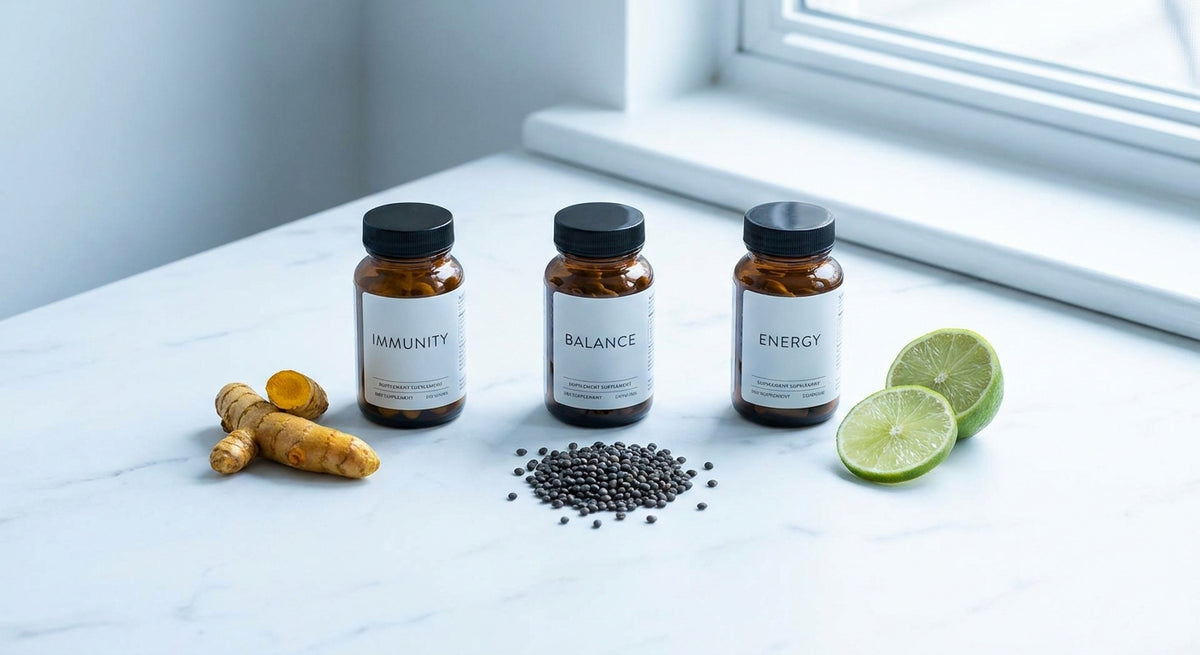
Deficiency to Optimisation: Vitamin D, B12 & Iron for Indians
By: Mugdha Pradhan
You've Been Supplementing for Months. So Why Do You Still Feel Exhausted?
You take your vitamin D capsule. You swallow a B12 tablet. You force down that iron syrup despite the metallic aftertaste. And yet, three months later, your blood work barely moves. The fatigue stays. The brain fog lingers. The hair keeps falling.
The problem is not whether you supplement. It is whether your supplement form is actually absorbed, whether your dose is clinically meaningful, and whether the level you are targeting is genuinely optimal.
Three structural failures explain why millions of health-conscious Indians supplement without recovering: outdated lab reference ranges that confuse "not diseased" with "healthy," poor-quality supplement forms with dismal bioavailability, and the complete absence of cofactor thinking. This is a systems-level guide for people who already read labels and want clinical clarity, not generic advice.
The Sunny Country Paradox: Why 3 in 4 Indians Have Suboptimal Vitamin D
India sits in the tropics. Sunshine is abundant year-round. And yet, a nationwide Metropolis Healthcare study analysing over 22 lakh test results between 2019 and 2025 found that 46.5% of Indians are vitamin D deficient and a further 26% have insufficient levels. That is roughly 3 in 4 Indians with suboptimal vitamin D.
Four structural drivers explain this paradox. First, higher melanin pigmentation in Indian skin significantly reduces cutaneous vitamin D synthesis from UV exposure. Second, urban indoor lifestyles, particularly among working professionals, limit meaningful sun exposure. Third, air pollution in Indian cities blocks UVB rays before they reach the skin. Fourth, cultural clothing norms reduce the skin surface area exposed to sunlight.
This is not an elderly problem. According to The Indian Practitioner, citing ICRIER data, 84% of Indians under 25 and 81% of those aged 25 to 40 are deficient. The crisis sits squarely in the working-age population.
The regional data is equally striking. South India, the sunniest region in the country, has the highest deficiency rate at 51.6%, with Kerala, Tamil Nadu, and Puducherry each exceeding 50%. Sun exposure alone is clearly an unreliable vitamin D source for most urban Indians. Targeted supplementation is non-negotiable.
'Not Deficient' Is Not the Same as Optimal: Rethinking Your Lab Report
Most Indian lab reports flag vitamin D deficiency only when levels fall below 20 ng/mL. A 2025 Indian expert consensus of 41 endocrinologists, conducted using the DELPHI method with over 90% agreement and published in the Indian Journal of Endocrinology and Metabolism, recommends maintaining 25(OH)D levels between 40 and 60 ng/mL for physiological optimisation. That is two to three times higher than the threshold most labs use to flag a problem.
The same gap exists for B12. Standard labs flag deficiency below 200 pg/mL, but functional health practitioners target 400 to 700 pg/mL for neurological and metabolic function. A person at 250 pg/mL is told they are "normal" while experiencing fatigue, numbness, and cognitive decline.
For ferritin, the anaemia threshold sits at 12 ng/mL. Optimal ferritin for energy, cognitive performance, and thyroid function is 50 to 100 ng/mL. Millions of Indians, particularly women, sit in this "normal but not optimal" zone, experiencing symptoms their lab reports cannot explain.
These reference ranges were designed to detect disease, not support performance. If your report says "normal," ask your doctor for the exact number and interpret it against functional targets. A green flag on a lab printout does not mean your body has what it needs to function well.
Form Determines Outcome: Why the Type of Supplement You Take Changes Everything
Bioavailability is the proportion of a nutrient that actually reaches your circulation and tissues. It varies dramatically by supplement form. India's mass-market supplements consistently use the cheapest, least bioavailable options available.
Vitamin D: D3 + K2, Not Plain D3
Vitamin D3 (cholecalciferol) is significantly more effective than D2 (ergocalciferol) at raising serum 25(OH)D. The critical detail most brands ignore: D3 without K2 (specifically the MK-7 form) risks calcium accumulating in arteries rather than being directed to bones. The recommended ratio is 25 to 50 mcg of K2 per 1,000 IU of D3 for synergistic bone and cardiovascular benefit.
B12: Methylcobalamin, Not Cyanocobalamin
Cyanocobalamin is the cheapest and most common form of B12 in Indian supplements. Your body cannot use it directly; it must first convert it to its active coenzyme forms, methylcobalamin and adenosylcobalamin. A 2024 randomised controlled trial found that Sucrosomial B12 achieved peak serum levels of 454 to 496 pg/mL by day 5, compared to 274 to 304 pg/mL with conventional formulations — roughly 65% higher peak levels from a change in delivery form alone.
Iron: Ferrous Bisglycinate, Not Ferrous Sulfate
Non-heme iron from plant-based diets has absorption rates of just 2 to 20%, compared to 15 to 35% for heme iron. According to the Metagenics Institute, ferrous bisglycinate has at least 2x higher bioavailability than ferrous sulfate and causes significantly fewer gastrointestinal side effects. This matters enormously for the vegetarian Indian consumer who abandons iron supplements due to constipation and nausea.
The Cofactor Principle
Iron absorption is enhanced by vitamin C. B12 requires healthy gut function and intrinsic factor. D3 needs K2 to direct calcium properly. Supplementing in isolation, without understanding these cofactor relationships, is a key reason why Indians supplement faithfully but never actually recover.
The Vegetarian Paradox: India's Dietary Structure Creates a Triple Deficiency Risk
India's predominantly plant-based diet is the single biggest driver of B12 and iron deficiency, and a significant contributor to vitamin D deficiency. Public health messaging rarely addresses this directly, but the data is unambiguous.
B12 is found almost exclusively in animal products. A 2025 meta-analysis in the European Journal of Cardiovascular Medicine found 65% of Indian vegetarians have inadequate B12, compared to 32% of non-vegetarians. B12 supplementation is not part of India's current public health policy. Only iron and folic acid are provided under national programs, leaving this gap entirely unaddressed at the system level.
For iron, vegetarians consume only non-heme iron, which has 2 to 20% absorption. Phytates and tannins in staple Indian foods (dal, tea, spinach) further inhibit absorption. According to Frontiers in Health Services, iron bioavailability from the Indian diet is just 6 to 12%. Vegetarians need approximately 1.8x the RDA to compensate.
A critical and underreported interaction: tens of millions of Indians with type 2 diabetes on long-term metformin are at high risk of B12 depletion, yet routine B12 monitoring is rarely done for these patients. Additionally, B12 and folate deficiency can cause megaloblastic anaemia that mimics iron deficiency anaemia. Iron supplementation alone will not resolve anaemia if B12 is also depleted.
What a Clinically Intelligent Supplementation Protocol Actually Looks Like
Step one: test properly. Request 25(OH)D, serum B12, serum ferritin, and a complete blood count (CBC). Do not accept "normal" as an answer. Ask for the exact numbers.
Step two: interpret against functional targets, not lab flags.
- Vitamin D: Target 40 to 60 ng/mL. Supplement with D3 paired with K2 MK-7 at the correct ratio. Retest at 3 months.
- B12: Target 400 to 700 pg/mL. Use methylcobalamin or adenosylcobalamin. If gut function is compromised, consider delivery systems with superior absorption profiles.
- Iron: Target ferritin 50 to 100 ng/mL. Use ferrous bisglycinate with vitamin C. If anaemia is present, address co-existing B12 and folate deficiency before assuming iron alone will resolve it.
Step three: choose formulations built for clinical outcomes. iThrive Essentials formulations are built directly from protocols used across 6,000+ health journeys in the iThrive ALIVE functional nutrition practice. Every product uses clinically effective doses in the right forms, with zero fillers or dilution, at a fraction of the cost of imported equivalents.
This is a systems approach. Vitamin D, B12, and iron interact with each other and with cofactors. Optimising all three together, with the right forms and doses, produces outcomes that isolated supplementation cannot match.
The Shift That Changes Everything: From Correcting Deficiency to Sustaining Optimisation
The goal is not to cross a lab threshold once and stop. It is to maintain physiological optimisation as a long-term health strategy.
Progress is real but slow. Vitamin D deficiency rates in India declined from roughly 51% in 2019–20 to approximately 43% in 2023–24. Meaningful, but still a massive public health burden that individual action must address.
If you are reading this, you are likely ahead of the system. National programs still focus only on iron and folic acid. B12 remains unaddressed at the policy level. Lab reference ranges remain outdated. Informed self-advocacy is not optional; it is essential.
Get tested. Interpret your results against functional targets. Choose supplement forms that are actually absorbed. Treat optimisation as an ongoing practice, not a one-time fix. That shift, from correcting deficiency to sustaining optimisation, is where health outcomes genuinely change.
This article reflects clinical protocols used in the iThrive ALIVE functional nutrition practice, informed by 10+ years of clinical expertise and 6,000+ documented health journeys.
Sources
- Metropolis Healthcare Vitamin D Deficiency Study (2019–2025)
- The Indian Practitioner — ICRIER Report on Vitamin D Deficiency
- Indian Journal of Endocrinology and Metabolism — Expert Consensus on Vitamin D (2025)
- Nutrients — Comparative Bioavailability of Sucrosomial vs. Conventional Vitamin B12 (2024)
- European Journal of Cardiovascular Medicine — Meta-analysis of B12 Deficiency in India (2025)
- PMC — Vitamin D Deficiency and Neurological Morbidity in India (2025)
- Frontiers in Health Services — Enhancing Anemia Diagnostics in India (2025)
- Nutrition Reference — Heme vs Non-Heme Iron Bioavailability
- Metagenics Institute — Ferrous Bisglycinate and Iron Supplementation

Leave a comment
This site is protected by hCaptcha and the hCaptcha Privacy Policy and Terms of Service apply.